-
Title
-
Stanton, Elizabeth Cady (1815-1902)
-
birthday
-
1815-11-12
-
Birthplace
-
Johnstown, NY
-
Death Date
-
1902-10-26
-
Occupation
-
Author
-
Women's rights activist
-
Biographical Text
-
Elizabeth Cady Stanton was an author, women's rights activist, and leader of the 1848 Seneca Falls Convention for Women's Rights. Stanton was born into the leading family of Johnstown, NY. Her father was conservative while her mother was progressive. Stanton was the seventh of eleven children, six of which passed in childhood. Stanton received many educational opportunities growing up. She wished to attend college, but non accepted women at the time. She instead enrolled in the Troy Female Seminary. In 1840, Stanton attended the World Anti-Slavery Convention in London, and was appalled by their treatment of women. She credits this experience as ammunition for her dedicated career to women's rights. In the summer of 1848, Stanton met with Lucretia Mott and three other progressive Quaker women. Together they organized the Seneca Falls Convention for Women's Rights. The convention took place July 19-20, with an estimated 300 individuals in attendance. Stanton was the primary author of the convention's Declaration of Rights and Sentiments, later modeled on the US Declaration of independence. In 1851, Stanton met Susan B. Anthony, and together they become the major organizers of the women's rights movement. In 1852, Stanton became president of the Women's State Temperance Society, with Anthony as her state agent. In 1863, Stanton worked on the organization of the Women's Loyal National League to campaign for the abolishment of slavery. This was the first national women's political organization in the US, and greatly contributed to the passage of the Thirteenth Amendment. Following the Civil War, Stanton formed the American Equal Rights Association, rallying for the rights of African Americans and women. At the time, Stanton disagreed with the proposed Fifteenth Amendment that stated suffrage for black men only. Stanton faced backlash from Frederick Douglass after the release of her articles on the topic included elitist and racially charged writing that discredited any woman not white and wealthy. A divide in the AERA was formed, with the side led by Stanton desiring suffrage for all African Americans and women simultaneously. In May of 1869, the National Woman Suffrage Association was formed with Stanton as president. Despite holding this role, Stanton disliked attending conventions, usually asking Anthony to attend in her place and essentially run the organization. The American Woman Suffrage Association was formed in opposition to the NWSA out of past members of the AERA that disagreed with Stanton. This divide lasted until the 1880s, when amends began to be made. Stanton was uninterested in making an effort, as at this point she disagreed with both groups narrow focus on suffrage. Regardless, the two groups merged into the National American Woman Suffrage Association in 1890, with Stanton serving as their president until 1892.
Stanton married Henry Brewster Stanton in 1840. They had seven children. On October 26, 1902, Stanton passed away due to heart failure. She was interred in Woodlawn Cemetery, beside her husband.
-
Contributor
-
O'Neill, Iris
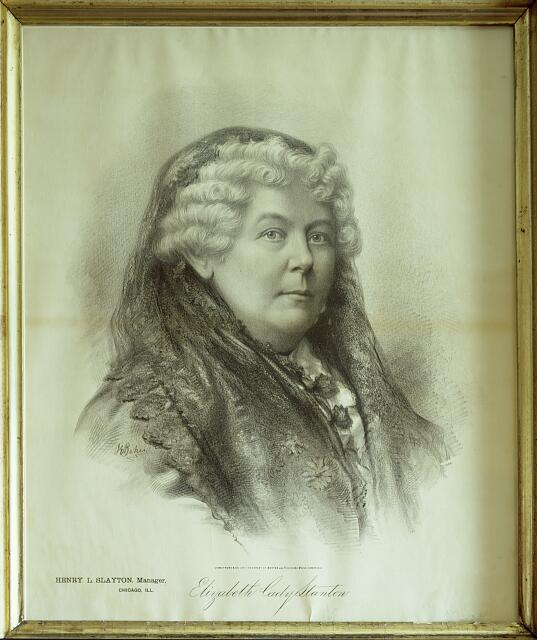
 Elizabeth Stanton, House and Marker
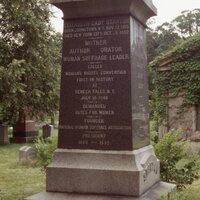 Elizabeth Stanton, Grave
 Elizabeth Stanton, Portrait Bust
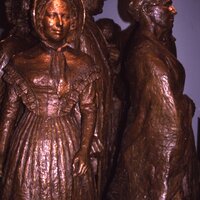 Women's Rights National Historical Park, The First Wave, Statue Exhibit
 The Women's Rights National Historical Park, Declaration of Sentiments, Monument