-
Title
-
Breaking the Chains: the Crusade of Dorothea Lynde Dix
-
Creator
-
Colman, Penny
-
Description
-
Penny Colman is talking about the remarkable yet often overlooked life of Dorothea Lynde Dix. Colman starts by talking about her journey along Route US 1 in Stockton Springs, Maine, leading to an impressive stone archway in Hampden that marks Dorothea Dix Park. The plaque on this archway serves as a springboard into Dix’s incredible history, detailing her role as a Civil War heroine and a global champion for prison reform and the humane treatment of the mentally ill. Colman highlights the immense global acclaim Dix received upon her death, including moving tributes from medical figures, resolutions by world leaders, and a dedicated poem by John Greenleaf Whittier, whilst noting her endless humanitarian efforts, which ranged from providing lifesaving gear for sailors to supplying layettes for mothers in need. Central to her legacy was her crusade for the indigent mentally ill, which liberated thousands from horrific conditions in dungeons and prisons and directly led to the establishment of dozens of mental health hospitals across North America, Europe, and Asia. Ultimately, Colman frames Dix’s story as a profound personal quest for meaning, one that officially began in March 1841 when, despite her own ill health, a 39 year old Dix stepped up to teach female inmates at the East Cambridge jail, setting her on a lifelong path of extraordinary public service.
-
Text
-
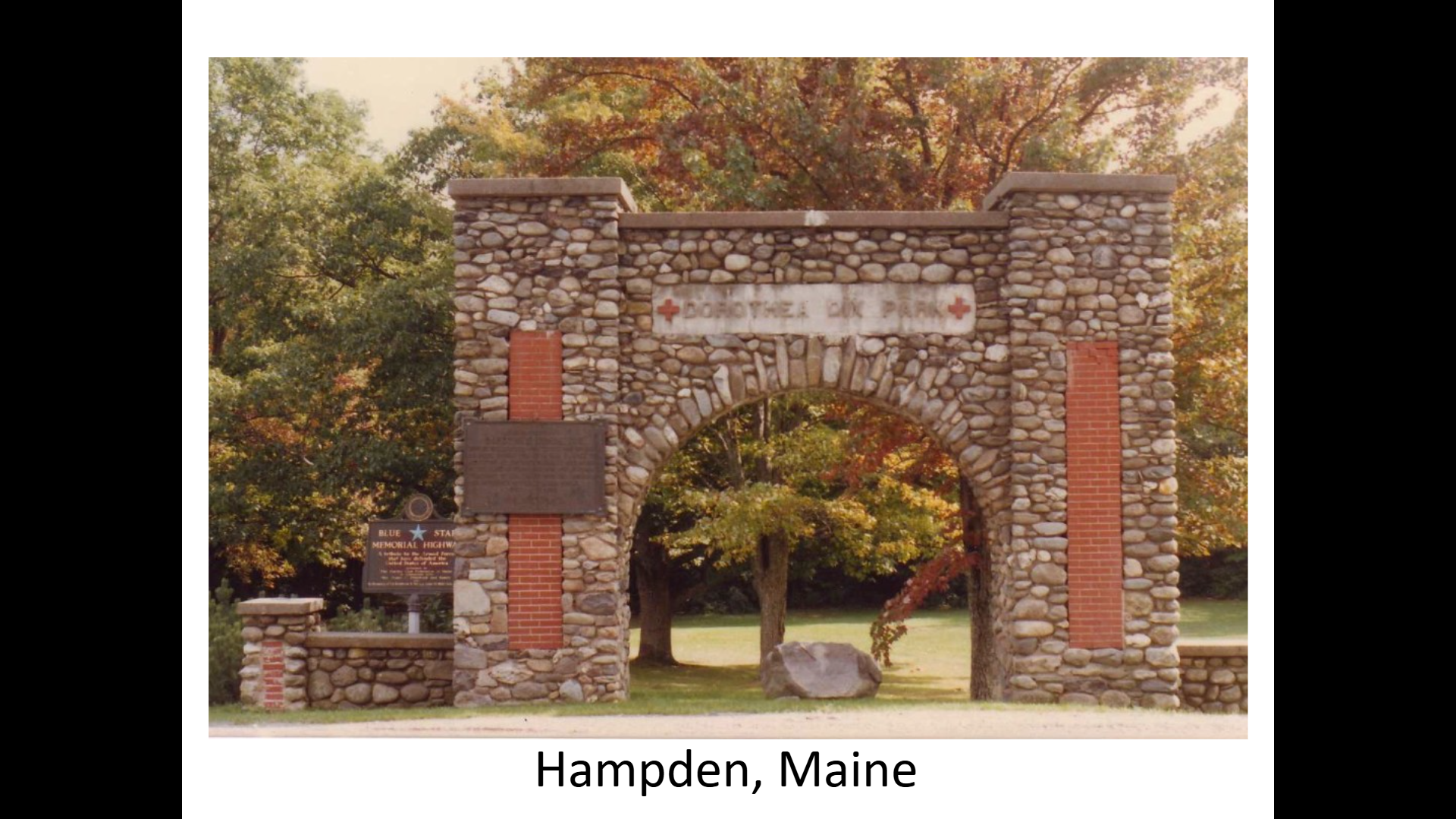
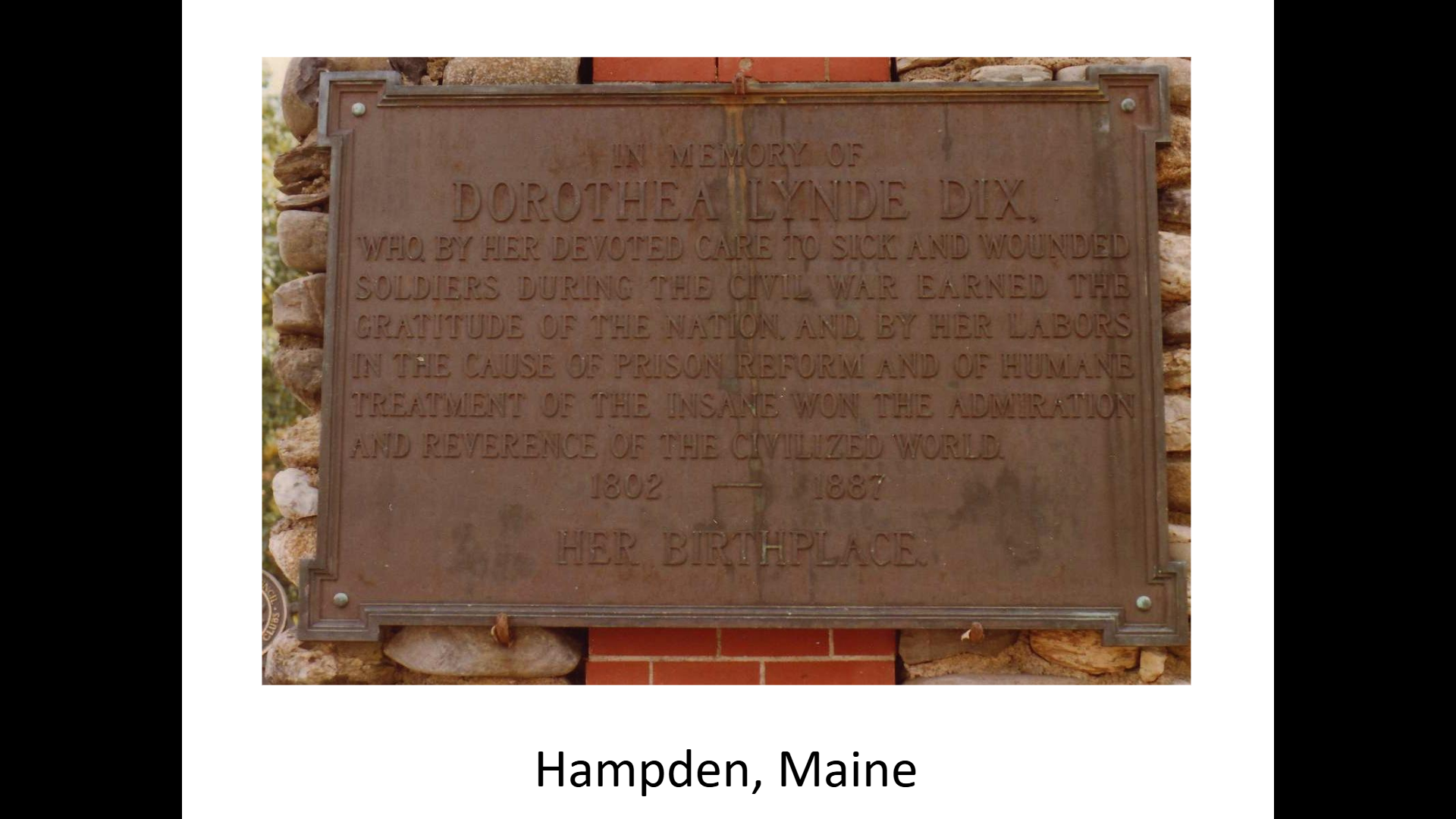
If you decided to drive along the coast of Maine on route US 1, about eleven miles north of Belfast in the town of Stockton Springs you'd arrive at route alt 1 headed north to Bangor. A turn onto that road and another twenty miles and you'd arrive at the town of Hampden. At the south end of this stately old town, you'd pass an impressive stone archway displaying the words DOROTHEA DIX PARK.
"Dorothea who" you'd probably wonder, and, if you decided to stop, the information on the plaque attached to one side of the arch would elicit the response, "I didn't know that!" (not an uncommon reaction from most of us when we read a historical markers). For written there are these words:
In Memory of
DOROTHEA LYNDE DIX
who by devoted care to sick and wounded soldiers during the Civil War earned the gratitude of the Nation, and by her labors in the cause of prison reform and of humane treatment of the insane won the admiration and reverence of the civilized world
1802-1887
HER BIRTHPLACE
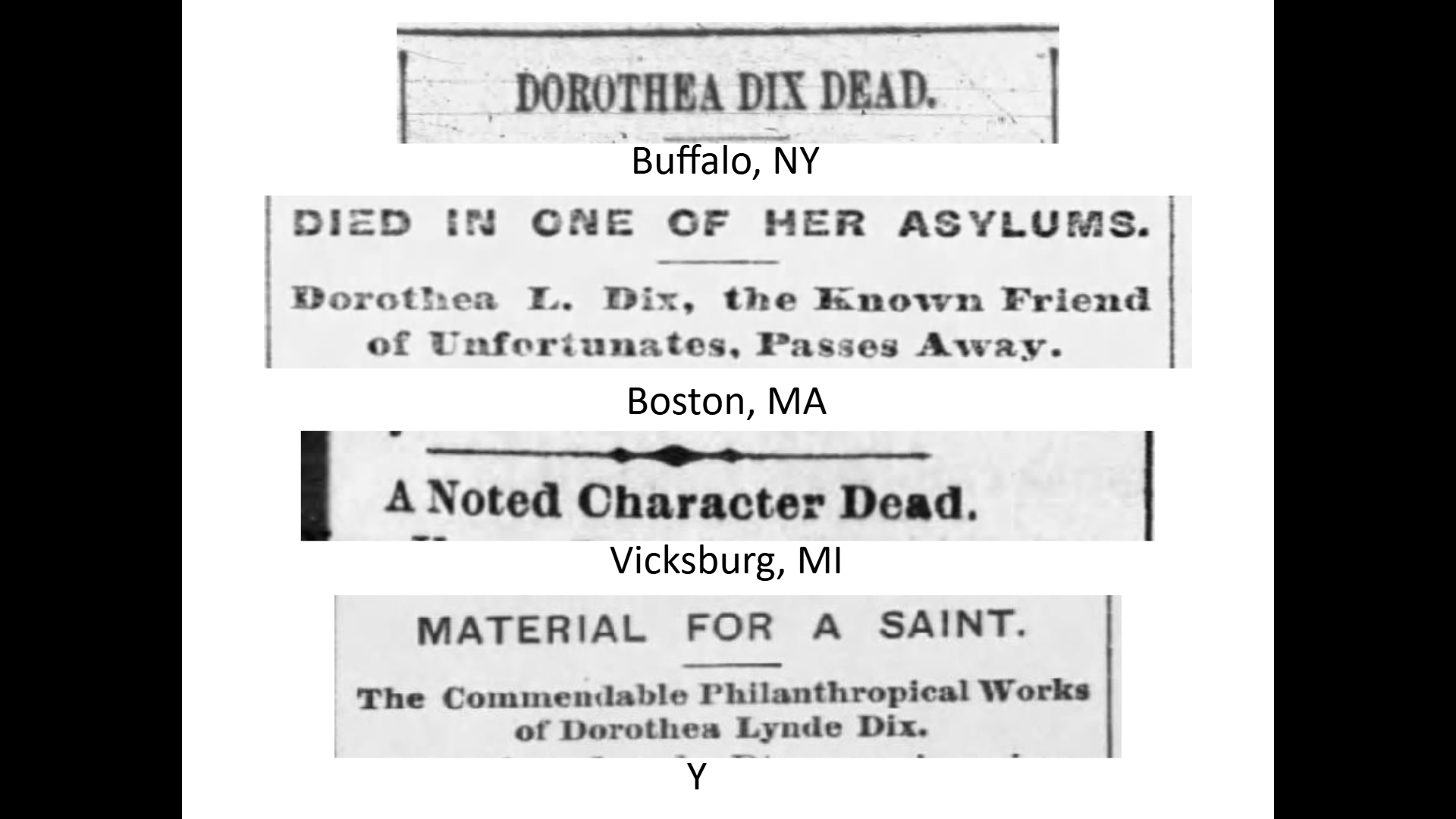
When Dorothea Dix died a hundred years ago, innumerable tributes resounded throughout the world–resolutions by governing bodies and heads of states, glowing newspaper eulogies, and When Dorothea Dix died a hundred years ago, innumerable tributes resounded throughout the world--resolutions by governing testimonials. Dr. John H. Nichols, first superintendent of the Army and Navy Hospital (St. Elizabeth's in Washington, DC) built because of Dix's efforts, wrote after her death, "Thus has died and been laid to rest in the most quiet and unostentatious way the most useful and distinguished woman that America has produced." A physician in England wrote five years after her death, "Saintship is not the exclusive property of the church, medicine has also her annals."
She was involved is a variety of humanitarian activities--prison reform, raising money for adequate lifesaving apparatus for storm-tossed sailors, supplying layettes for indigent mothers, securing flower seeds and shrubs to beautify the grounds of an orphanage or penitentiary, donating a fountain for thirsty animals in Custom House Square, Boston for which the poet John Greenleaf Whittier wrote:
Stranger and traveler!
Drink freely and bestow
A kindly thought on her
Who bade this fountain flow;
Yet hath for it no claim
Save as the minister
Of blessing in God's name.
and during the Civil War she was commissioned the first Superintendent of United States Army Nurses. The worldwide acclaim and accolades came as a result of her work in [on] behalf of indigent mentally ill people. As one biographer writes, "As a result of her untiring efforts thousands of demented souls were released from dungeons, caves and prisons and placed in hospitals where they were given care and treatment benefitting the sick and unfortunate of humanity." As a direct result of her efforts, thirty-two hospitals were established in America, several in Europe and indirectly at least two in Japan.
Dorothea Dix's life is a study in [a] one person quest for meaning. For her it began on March 28, 1941 when she was thirty-nine years old. John Nichols, a student at Harvard Divinity School, was assigned to teach a group of twenty women inmates at the East Cambridge jail. After on[e] session he realized he was not the person for the task. His mother suggested he talk with Dorothea Dix because she might know someone who would be suited. Although Dorothea had been ill for some time she insisted that she would go herself.
-
Rights
-
CC BY
-
Contributor
-
Webb, Matthew